Rigid Metal vs. Flexible Dryer Ducts: Which Is Safer For Your Home?
Still using white plastic or foil accordion hoses behind your dryer? Learn why modern building codes ban these materials and why rigid aluminum is the gold standard.
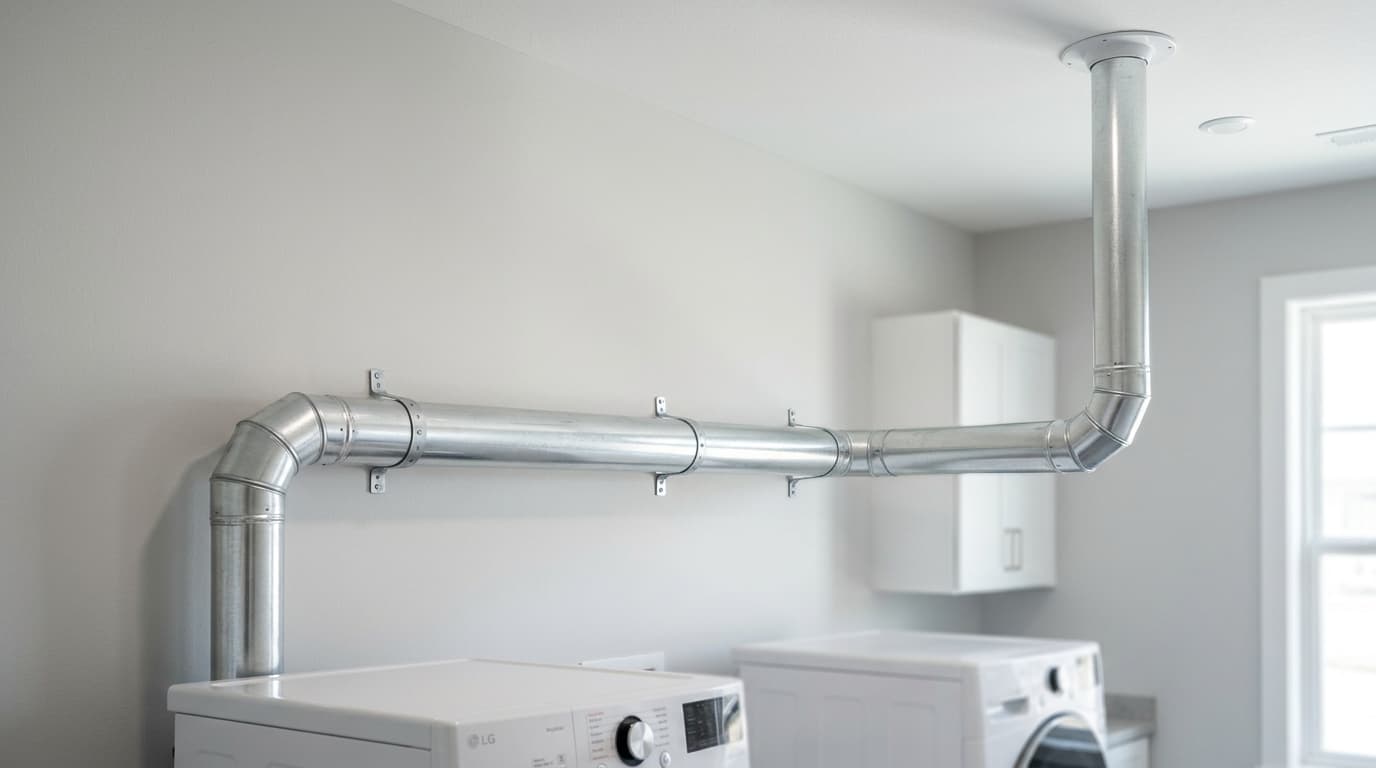
When inspecting homes throughout Midlothian, Waxahachie, and Ovilla, our technicians frequently discover outdated or unsafe transition ducting connecting the back of the dryer to the wall inlet. In many older properties, homeowners are still utilizing corrugated white vinyl plastic or flimsy thin-foil accordion tubing.
The Dangers of Foil and Plastic Flex Ducts: Flexible vinyl and foil accordion ducts are dangerous for three critical reasons. First, their internal corrugations create high friction and air turbulence, acting like miniature speed bumps that catch floating lint. Within months, the ridges fill with combustible lint blankets.
Second, when a dryer is pushed back against the wall, flexible ducts easily crush, kink, or collapse, reducing the 4-inch cross-sectional area to less than 1 inch. This instantly chokes exhaust velocity.
Third, in the event of an internal dryer fire, thin foil or plastic burns through in less than 30 seconds, discharging open flames and toxic carbon monoxide fumes directly into your laundry room.
Why Rigid Metal Ducts Are the Code Standard: The International Residential Code (IRC Section M1502) and major appliance manufacturers specify that dryer exhaust ducts must be constructed of smooth-walled, rigid metal pipe (galvanized steel or aluminum) at least 0.0157 inches thick (28 to 30 gauge).
Rigid metal pipes have ultra-slick interiors that minimize airflow resistance, carry lint all the way to the exterior termination, and can withstand high heat without puncturing. For the short transition run from the dryer to the wall collar (maximum 8 feet), semi-rigid aluminum ducting is acceptable, provided it is properly secured with stainless steel hose clamps rather than duct tape.
Industry Fire Safety Benchmark
For detailed scientific guidelines and fire prevention best practices, refer to the NFPA clothes dryer safety research & guidelines, which establishes strict standards for residential exhaust duct maintenance.
Related Services & Local Midlothian Resources
If your laundry room is exhibiting symptoms of restricted airflow, schedule a complete dryer vent cleaning→ or diagnostic video camera inspection→. We also offer specialized dryer vent repair→ and serve homeowners throughout Midlothian, TX→ and neighboring Waxahachie, TX→.
Dryer Vent Cleaning Midlothian Safety Team
Certified dryer exhaust technicians serving Ellis & Dallas Counties.
Read Next
7 Danger Signs Your Dryer Vent Is Dangerously Clogged (And What To Do)
If your clothes take more than 45 minutes to dry or your laundry room feels like a sauna, your dryer exhaust is signaling a dangerous blockage. Learn the 7 crucial warning signs.
Read Post→How Often Should You Actually Clean Your Dryer Vent in North Texas?
Does your household need annual cleaning, or should you schedule service every 6 months? Discover the key variables that dictate your optimal dryer vent cleaning schedule.
Read Post→Dryer Vent Cleaning Cost: What Determines The Price in Midlothian, TX?
Understand what influences the cost of professional dryer vent cleaning—from duct length and roof access to bird nest extraction—and avoid cheap 'bait-and-switch' scams.
Read Post→Protect Your Family from Dangerous Dryer Vent Fires
Annual professional cleaning eliminates 100% of combustible lint and lowers your monthly electric bill.